Most adults need roughly 25 to 40 g of fibre a day. India's ICMR-NIN puts it at about 30 g per 2,000 kcal, which works out to 25 g for a sedentary woman and 30 g for a sedentary man. Fibremaxxing is a social-media name for hitting that number. The goal is sound. The speed, and the powders, are where people go wrong.
There is nothing new about eating more dal, whole grains and fruit. What is new is the branding, the daily gram counts on Reels, and a fresh shelf of products built to help you hit them.
Disclosure: hüsko sells isabgol, a fibre supplement, which is exactly why this article starts with food and links every number so you can check it.
What is fibremaxxing?
Fibremaxxing means deliberately eating enough fibre to meet, or beat, the recommended daily amount. CNBC reported in July 2025 that it was trending on TikTok as "#Fibermaxxing", with one dietitian calling fibre "the new protein".
It reached Indian food and lifestyle media within months. Onmanorama ran Indian snack ideas for it in October 2025, and Harper's Bazaar India covered it in March 2026, describing the target as "around 25–30 grams for most adults".
Strip out the hashtag and it is ordinary nutrition advice that has been in Indian dietary guidelines for years. That is a point in its favour.

How much fibre do you need a day?
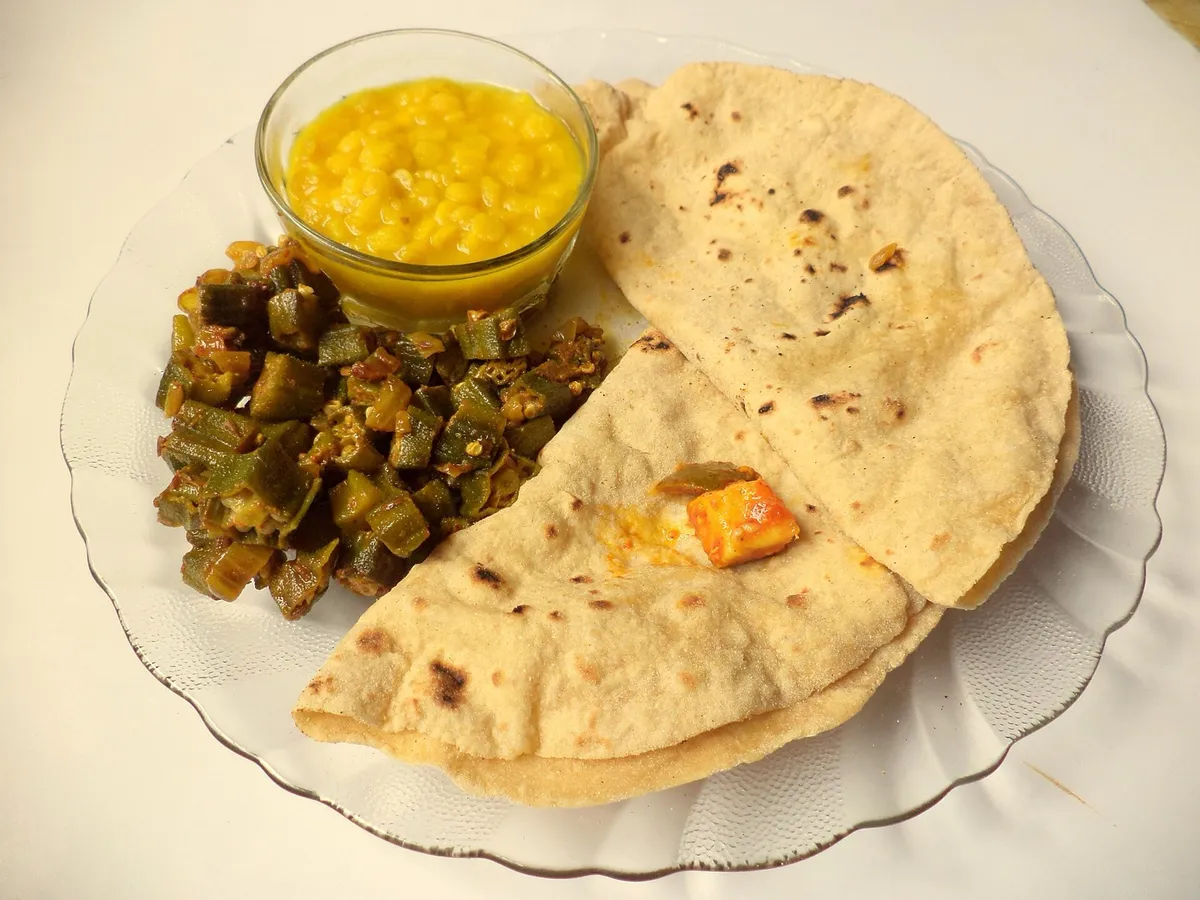
In India, the reference is ICMR-NIN's 2020 nutrient requirements. They set fibre by energy intake for the first time and state that "the level of about 30 g/2000 kcal has been considered as safe intake" (short report, page 5). That scales with how active you are and how much you eat.
The ICMR-NIN 2020 summary table (short report, page 13) lists daily fibre as an adequate intake:
| Adult group | Sedentary | Moderately active | Heavy activity |
|---|---|---|---|
| Men (65 kg reference) | 30 g | 40 g | 50 g |
| Women (55 kg reference) | 25 g | 30 g | 40 g |
Most desk-job readers sit in the sedentary column. If you train hard most days, the higher columns apply because you are eating more food overall.
International figures land in the same range. The WHO's 2023 guideline says adults should get at least 25 g of naturally occurring fibre a day. The European Food Safety Authority considers 25 g a day adequate for normal bowel function. The US Dietary Guidelines use 14 g per 1,000 kcal, which comes to 25 to 28 g for women and 31 to 34 g for men under 51 (Appendix 1, page 133). The UK's NHS says 30 g.
How much fibre do Indians actually eat?
There is no large, independent national survey of Indian fibre intake that we could find. The number you will see quoted, that about 7 in 10 Indians fall short, comes from a brand.
It is an ITC Aashirvaad "Happy Tummy" analysis of self-reported responses from over 6.5 lakh people aged 18 to 60, collected 2021 to 2025 on the brand's own platform. It reported over 73% of women and over 63% of men falling short. Aashirvaad sells atta, including high-fibre atta, and the sample is self-selected, so treat it as a signal, not a measurement.
For comparison, the US guidelines say more than 90% of American women and 97% of men miss their target (page 101), and the NHS puts the average UK adult at about 20 g. Falling short seems to be the global default, not an Indian quirk.
Which Indian foods are high in fibre?
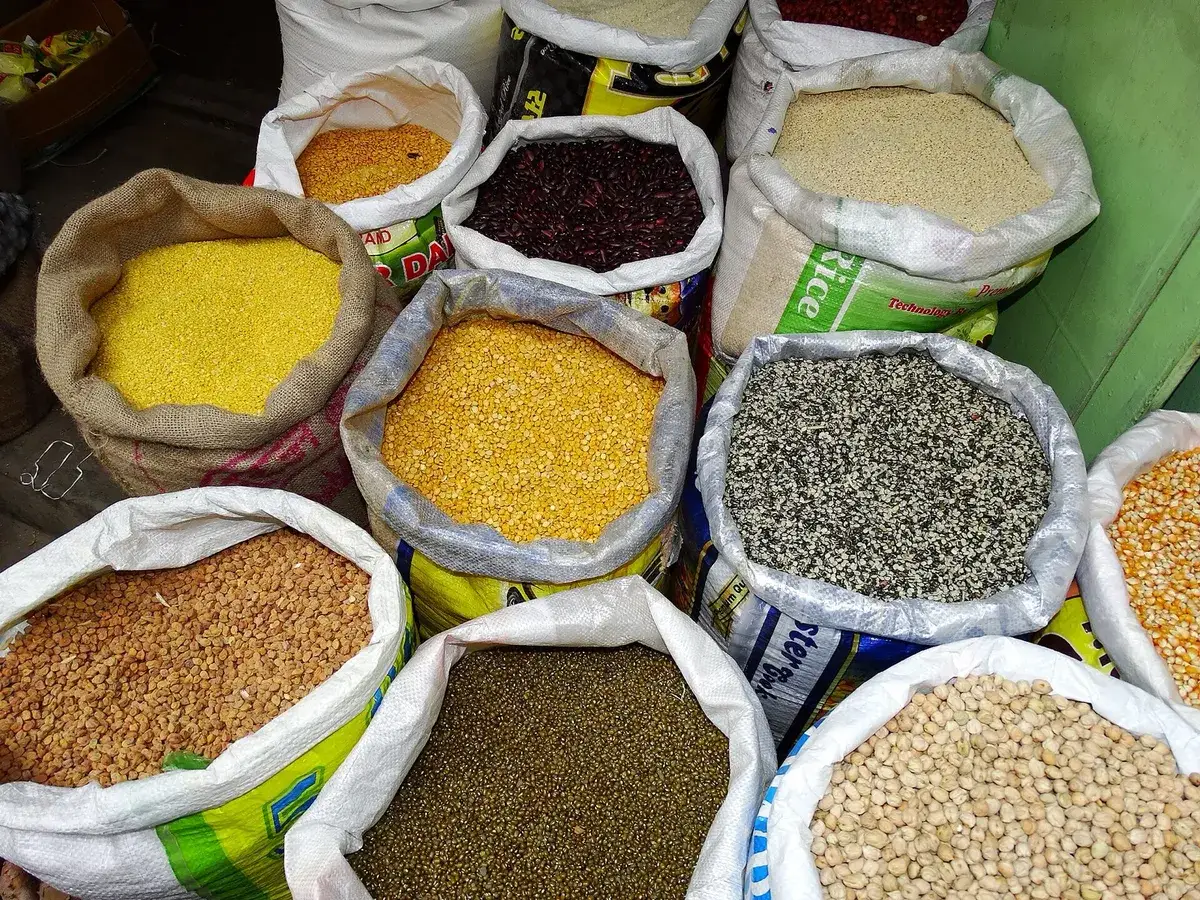
Pulses do most of the work, then whole grains and millets, then fruit and vegetables. ICMR-NIN's Dietary Guidelines for Indians 2024 put average fibre at about 12 g per 100 g raw for pulses, 7 g for millets, 6 g for cereals and 2 g for vegetables and fruits (Table 1.3, page 8).
Food by food, the Indian Food Composition Tables 2017 (NIN, Table 1, pages 3 to 17) give total dietary fibre per 100 g raw edible portion. Scaled to everyday servings:
| Food | Serving (raw weight) | Fibre per serving |
|---|---|---|
| Kala chana (whole Bengal gram) | 30 g dry | 7.6 g |
| Sabut moong (whole green gram) | 30 g dry | 5.1 g |
| Rajma, red | 30 g dry | 5.0 g |
| Masoor dal | 30 g dry | 3.1 g |
| Moong dal | 30 g dry | 2.8 g |
| Arhar (toor) dal | 30 g dry | 2.7 g |
| Atta, about one roti | 30 g flour | 3.4 g |
| Ragi or bajra | 30 g flour or grain | 3.4 g |
| Brown rice | 50 g raw | 2.2 g |
| White rice | 50 g raw | 1.4 g |
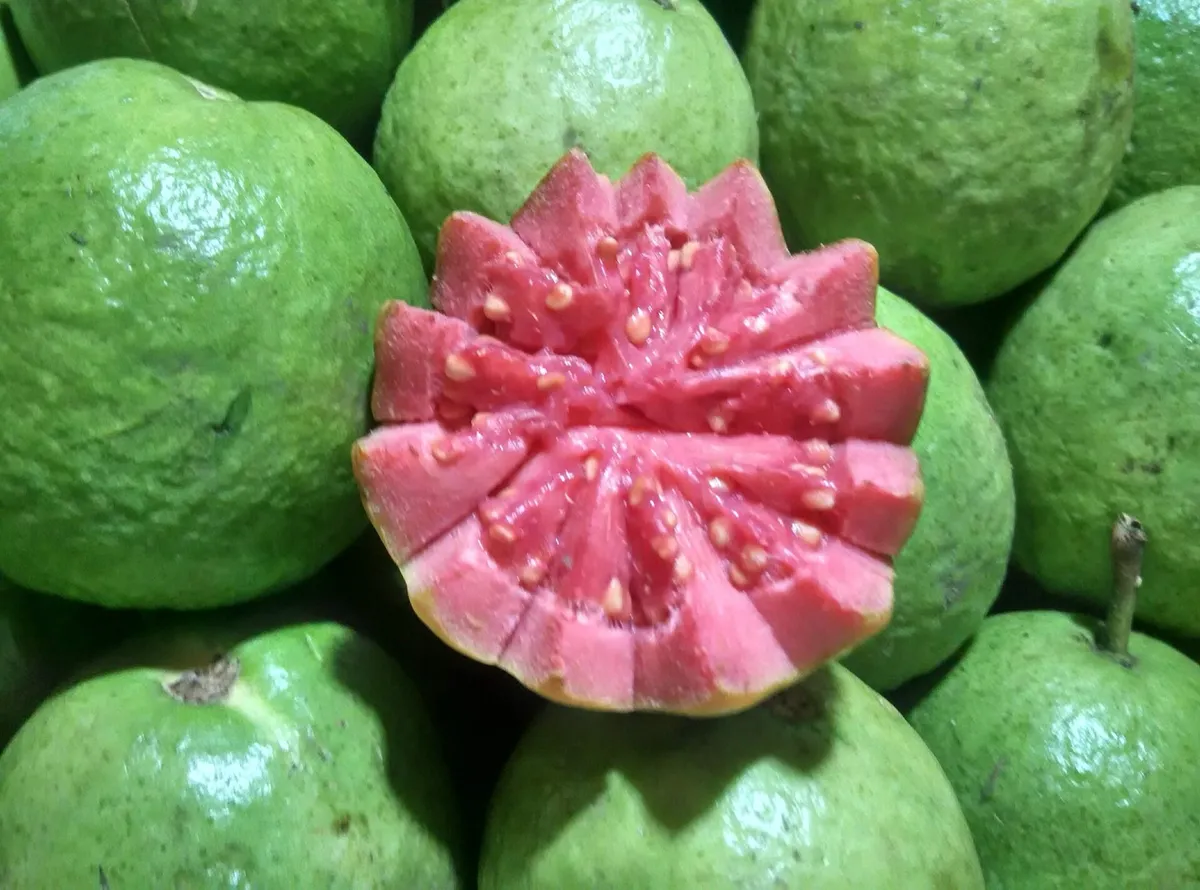
| Guava, white flesh | 100 g | 8.6 g |
| Pear | 100 g | 4.5 g |
| Apple | 100 g | 2.6 g |
| Bhindi (okra) | 100 g | 4.1 g |
| Palak (spinach) | 100 g | 2.4 g |
| Groundnuts | 30 g | 3.1 g |
| Alsi (flaxseed) | 10 g | 2.6 g |
Two patterns stand out. Whole pulses carry 1.5 to 2.5 times the fibre of their split, dehusked dal, and atta carries about four times the fibre of maida (11.4 g against 2.8 g per 100 g). Swapping the form of a food you already eat often matters more than adding a new one.

What does 30 g look like on an ordinary day?
Unremarkable, which is the point. Using the same IFCT 2017 values, a fairly ordinary day lands just over 30 g:
| Meal | What you eat | Fibre |
|---|---|---|
| Breakfast | Poha from 40 g rice flakes, with 50 g fresh peas | 4.6 g |
| Mid-morning | One guava, about 100 g | 8.6 g |
| Lunch | Two rotis (60 g atta), arhar dal (30 g dry), bhindi sabzi (100 g) | 13.6 g |
| Dinner | Rice (50 g raw) with rajma (30 g dry) | 6.4 g |
| Total | about 33 g |
No powders, no seeds sprinkled on everything. The swaps that move the total most are roti over maida, whole pulses over dal some days, and a fruit you actually eat whole rather than juice. The guidelines also suggest making at least half your grains whole grains (DGI 2024, page 1).

What does the evidence say fibre does?
The strongest evidence links eating more fibre from food with lower rates of several major diseases. The best-known review, Reynolds and colleagues in The Lancet, 2019, was part-funded by WHO and fed into its guideline work.
It pooled 185 prospective studies and 58 clinical trials. Comparing the highest fibre eaters with the lowest, the observational data showed a 15 to 30% lower risk across deaths from all causes and from cardiovascular disease, and new cases of coronary heart disease, stroke, type 2 diabetes and colorectal cancer. The risk reductions were greatest at 25 to 29 g a day. In the trials, higher fibre intakes lowered systolic blood pressure and total cholesterol.
Three caveats matter. Most of this is observational, so it shows association rather than proof, although the authors note the dose-response pattern suggests the link could be causal. It describes populations, not a guarantee for any one person. And the review explicitly excluded trials of supplements, so it is evidence about fibre in food.
Is too much fibre bad for you?
Too much, too fast, is the usual problem. MedlinePlus, the US National Library of Medicine's health site, says a quick jump can cause gas, bloating and cramps, and advises adding fibre gradually over a few weeks with plenty of fluids. Its reasoning is simple: water helps fibre move through the gut, so raise both together.
A practical ramp: add one higher-fibre swap a week, such as roti for maida, then a guava a day, then whole chana twice a week, and keep your water up as you go. If you are bloated for days, hold at the last level that felt fine.
There is also a ceiling to the bragging rights. A dietitian told CNBC that 70 g or more a day may be more than most people should have. The ICMR-NIN figures top out at 50 g, and that is for men doing heavy physical activity.
Some people should not simply eat more fibre:
- IBS. The UK's NICE guideline (1.2.1.5) says fibre should be reviewed and usually reduced, insoluble fibre such as bran discouraged, and any increase made with soluble fibre such as ispaghula (isabgol) or oats.
- Crohn's disease or a known narrowing of the gut. People with a stricture are often advised to limit tough, lumpy fibre such as whole pulses, nuts and raw vegetables, as this Cambridge University Hospitals leaflet explains.
- Difficulty swallowing or a history of bowel obstruction. Bulking fibre supplements carry a choking and blockage warning, covered in our isabgol safety guide. Do not use them without medical advice.
If you have any of these, a gastroenterologist or registered dietitian should set your target, not a hashtag.
Should you use a fibre supplement?
Food first, and for good reason. Harvard Health puts it plainly: it is generally better to get fibre from whole foods than supplements, because the foods bring other nutrients along. The outcome data above are also about food.
Where a supplement can make sense is the gap. If your day lands at 18 g and closing the rest with food is not realistic on a hostel menu or a travel week, a spoon of isabgol is one way to top up. NICE classes it as a soluble fibre, which is why it shows up in the cholesterol evidence and in the NICE advice for IBS.
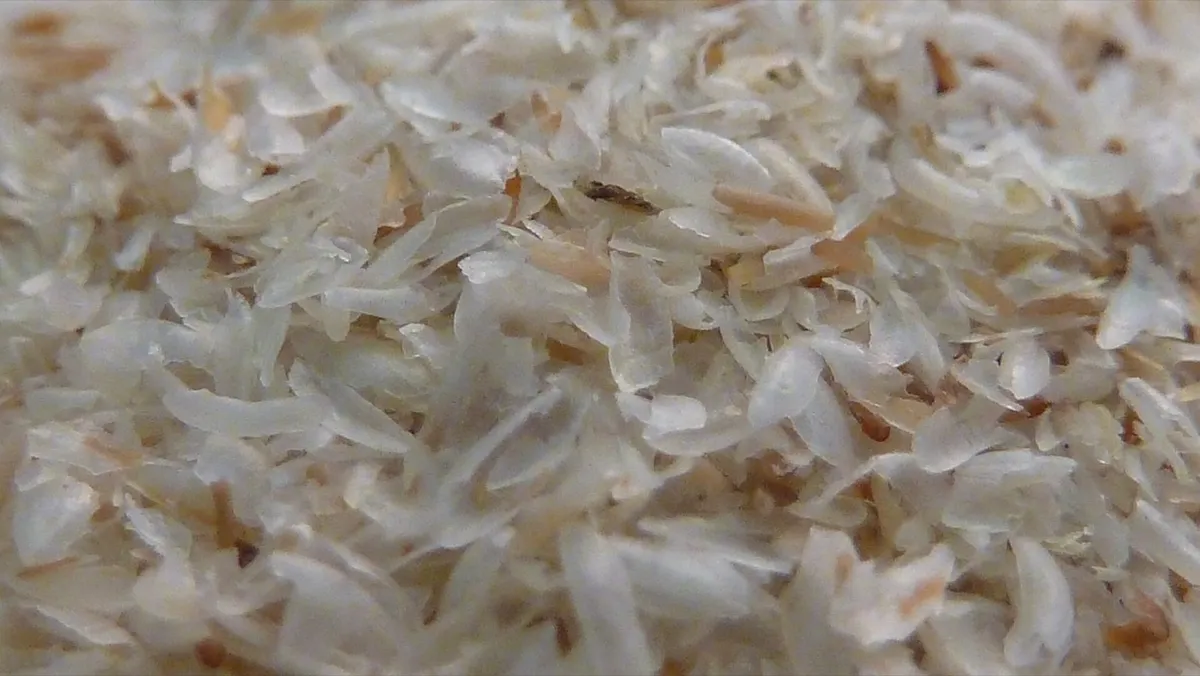

It is not a shortcut to anything else. It will not do what a plate of dal and vegetables does for the rest of your diet, and it is not a weight-loss tool. It does need a full glass of water every time, and spacing away from medicines. We have set out the safety details, including how far apart to take it from other medication, in can you take isabgol every day.
This article is general information, not medical advice, and anyone with a gut condition, a swallowing problem or regular medication should speak to a doctor or registered dietitian before changing their fibre intake.
What this adds up to
Fibremaxxing is a new name for an old, well-supported idea: most adults should eat 25 to 30 g of fibre a day, more if they are very active, and most fall short.
In an Indian kitchen, that target is mostly a matter of choosing the higher-fibre version of food you already eat: whole pulses, atta and millets, and a whole fruit a day. Get there over a few weeks, with water. Skip the competition for the highest number.
A supplement like isabgol can fill a real gap. It should not be the plan.