Most of the world's isabgol is grown in western Rajasthan, in the irrigated desert districts of Jaisalmer, Bikaner, Barmer, Nagaur and Jalore, with north Gujarat a smaller second. The seed is then mostly milled into husk in Gujarat, around the market town of Unjha, and roughly nine-tenths of it is shipped abroad.
Isabgol and psyllium husk are the same thing: the papery outer coat of the seed of Plantago ovata, a low desert plant. Hindi speakers also say isabgul, and the husk alone is sold as sat isabgol. The rest of the world mostly calls it psyllium or ispaghula.
The commonly quoted numbers disagree, some are years old, and one official figure is double what it should be. This article sets the sources side by side.
Disclosure: hüsko sells isabgol, and this article describes the industry from public data, not our own supply chain.
What plant does isabgol come from?
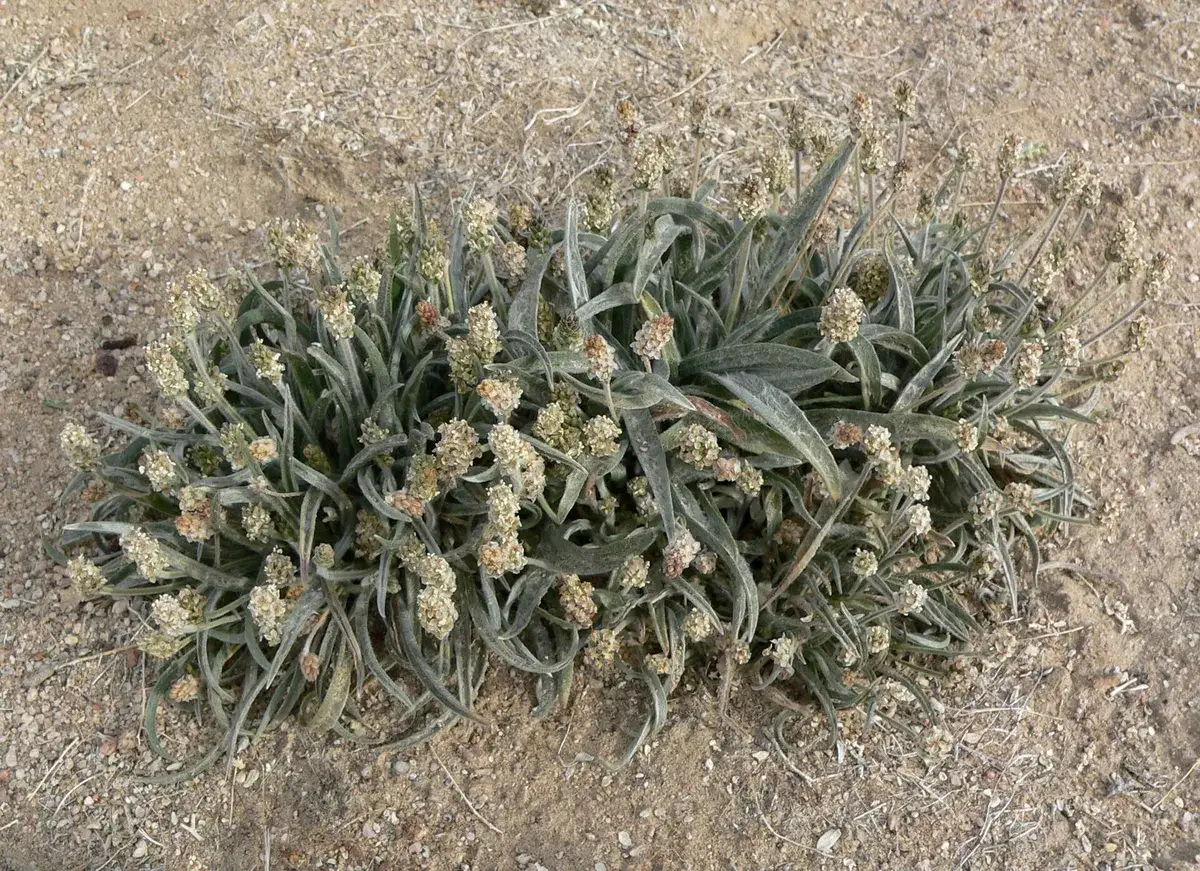
Isabgol comes from Plantago ovata, a small annual plantain with narrow, hairy, grey-green leaves and short spikes of papery flowers. Each spike sets tiny boat-shaped seeds. The husk is the seed's outer coat, which the European Medicines Agency defines as "the episperm and collapsed adjacent layers removed from the seeds".
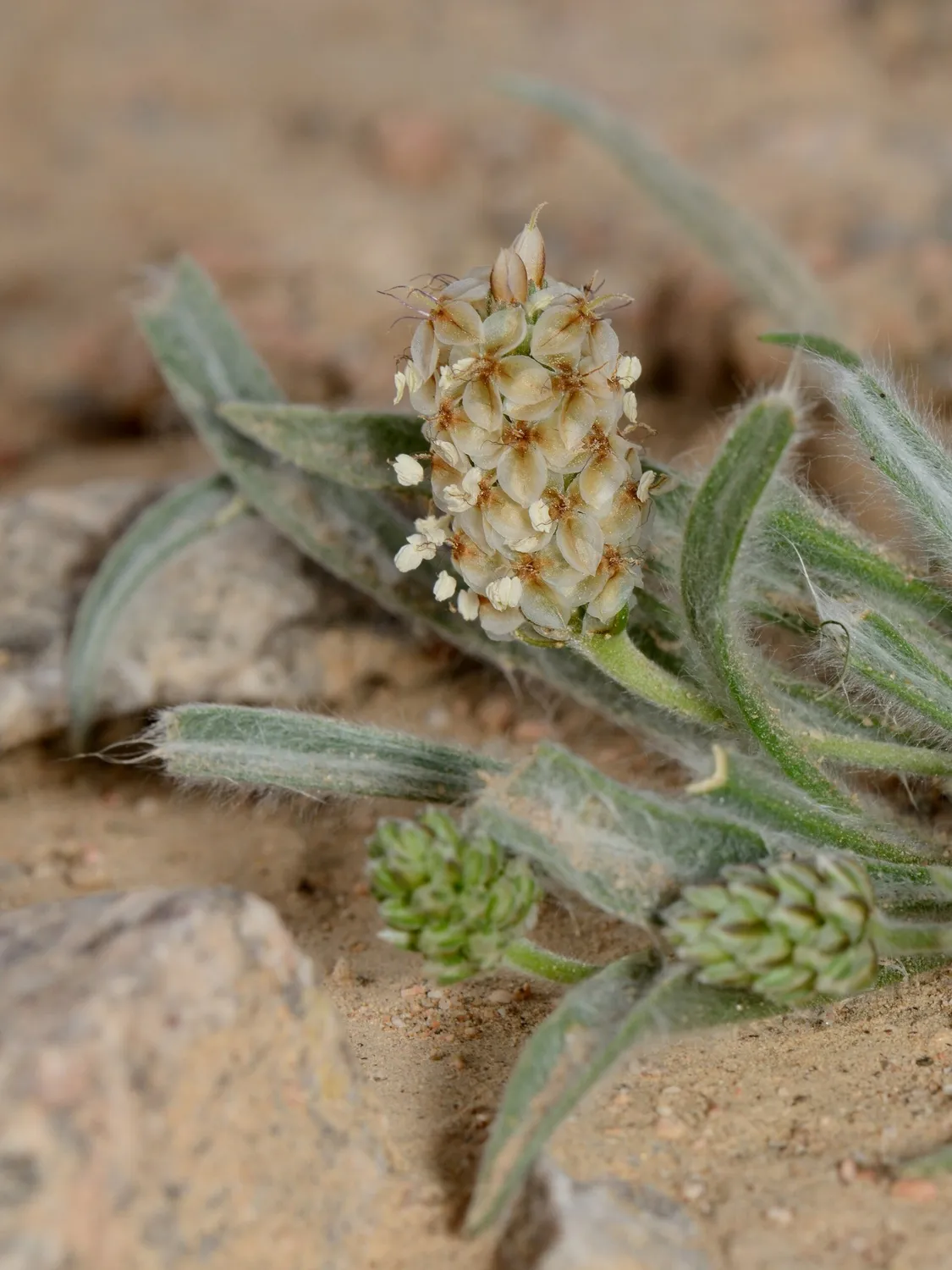

Where the plant is native is less settled than you might expect. The Wikipedia entry, citing the Flora of China, calls it native to the Mediterranean region and naturalised in Asia and North America. A processing manual from NIFTEM, the food-technology institute under India's Ministry of Food Processing Industries, calls it indigenous to India and the Mediterranean.
Nobody disputes the commercial part: it grows wild on several continents, but India is where it is farmed at scale. Where the name comes from is a separate story, told in our history of isabgol.

Where is isabgol grown in India?
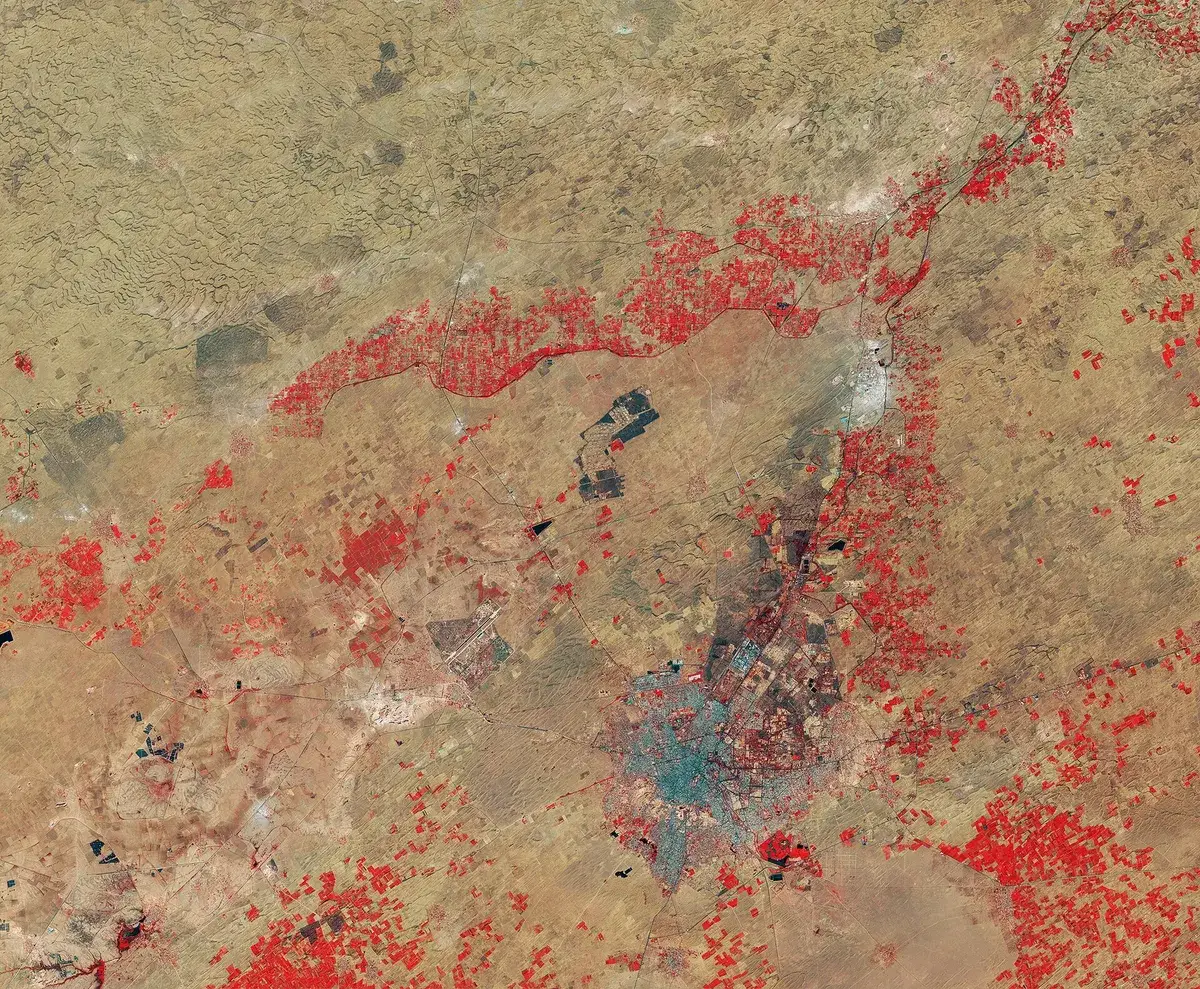
Isabgol is grown mainly in western Rajasthan, with north Gujarat second, and smaller areas in Madhya Pradesh, Haryana and Punjab. Rajasthan's own statistics put the 2023-24 crop at 632,990 hectares and 336,175 tonnes of seed, almost all of it from the arid western districts.
Those figures come from the Agricultural Statistics of Rajasthan 2023-24, published by the state's Directorate of Economics and Statistics, the most recent primary source we found.
The state lists production by district. These were the biggest producers in 2023-24:
| District | Isabgol seed, 2023-24 (tonnes) |
|---|---|
| Jaisalmer | 51,239 |
| Bikaner | 50,463 |
| Barmer | 48,184 |
| Nagaur | 43,236 |
| Jalore | 39,403 |
| Didwana-Kuchaman | 36,131 |
| Phalodi | 27,107 |
| Churu | 15,173 |
Rajasthan's district map has been redrawn recently, and the directorate notes it adjusted some figures to fit, so Balotra (6,509 tonnes) is listed apart from Barmer and Didwana-Kuchaman apart from Nagaur. On the old boundaries, Nagaur and Barmer would each sit higher.
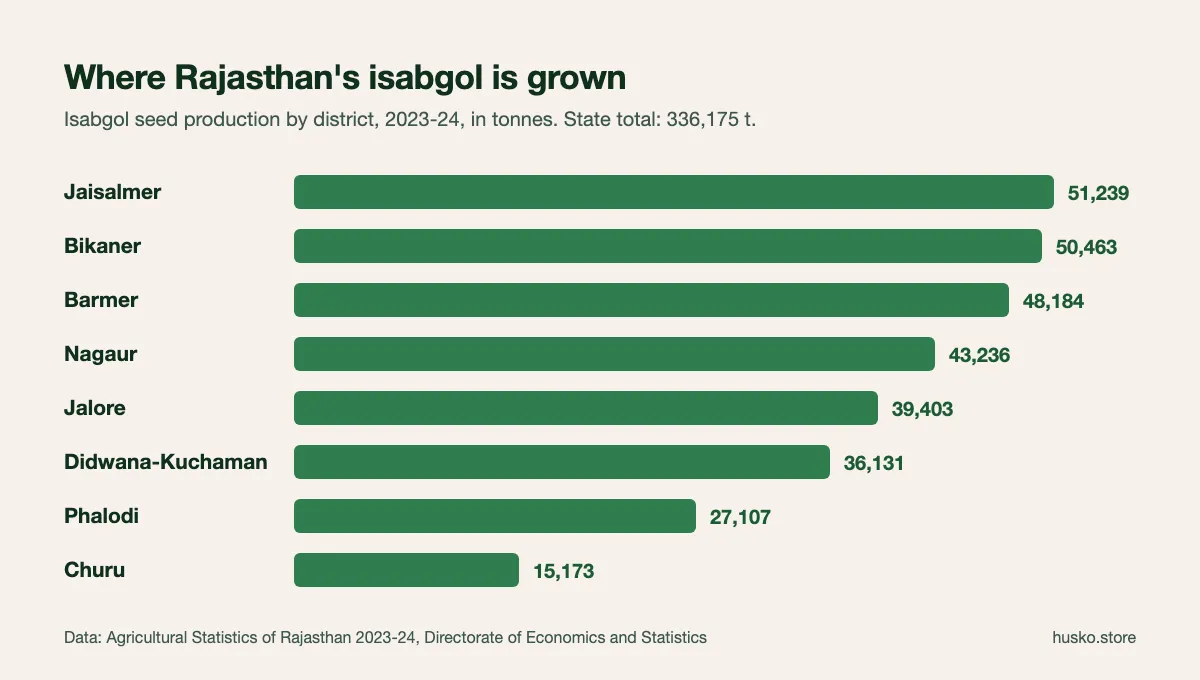
Two things stand out. First, a January 2025 trade report names Jalore, Barmer, Nagaur, Chittorgarh and Jaisalmer as the key districts. The state's table agrees on four of them, but records just 1,491 tonnes from Chittorgarh and more than 50,000 from Bikaner, which that list leaves out.
Second, the crop swings hard. In 2022-23 Rajasthan grew 176,710 tonnes on 463,406 hectares. A year later, production had nearly doubled.

Which state grows the most isabgol?
Rajasthan grows the most isabgol, and every source we found agrees on that. Where they differ is the share. Estimates of Rajasthan's portion of India's crop run from 67% to 70%, and none of them explains its method.
| Source | Rajasthan's share of India's isabgol | What it is |
|---|---|---|
| NIFTEM processing manual (2022) | 67%, "followed by Gujarat" | Government institute, no year given for the figure |
| Agro & Food Processing (Jan 2025) | 70% | Trade news, unsourced |
| Isabgol Processors Association chairman, quoted in the Hindustan Times (2026, via a reprint) | 70%, with Gujarat 30% | Industry estimate |
There is a deeper problem with the national totals. NIFTEM's manual gives India's average annual production as 120,000 tonnes, grown on 55,000 acres. Rajasthan alone harvested 336,175 tonnes from more than 1.5 million acres in 2023-24. The national figures in circulation are out of date, so treat any percentage built on them as approximate.
Gujarat is the clear second. A Banaskantha district government page calls that district "one of the leading producers" in the country. We could not find a current official figure for Gujarat's crop, so we have not given one.
Why does isabgol grow in the desert?
Isabgol is a rabi (winter) crop. It wants a cool season to grow and dry, sunny weather to ripen, and the winters of western Rajasthan and north Gujarat supply both. The weakness is rain: a government crop guide warns that even dew or a light shower at maturity makes the seed drop.
That guide, on India's Vikaspedia portal, says the crop needs "a cool climate with dry sunny weather during maturity" and that "even a mild dew, cloudy weather or light showers cause seed shedding". It suits sandy loam soils, takes four to five months, and should be sown so that the monsoon cannot coincide with ripening.
NIFTEM lists the same risks among the trade's main problems: unseasonal winter rain, seed shattering, and a late monsoon that delays sowing.
"Desert crop" does not mean rain-fed, though. Of Rajasthan's 632,990 hectares of isabgol in 2023-24, the state's statistics record 632,414 as irrigated. The desert supplies the dry air. The water comes from wells and canals.
How does the seed become husk?
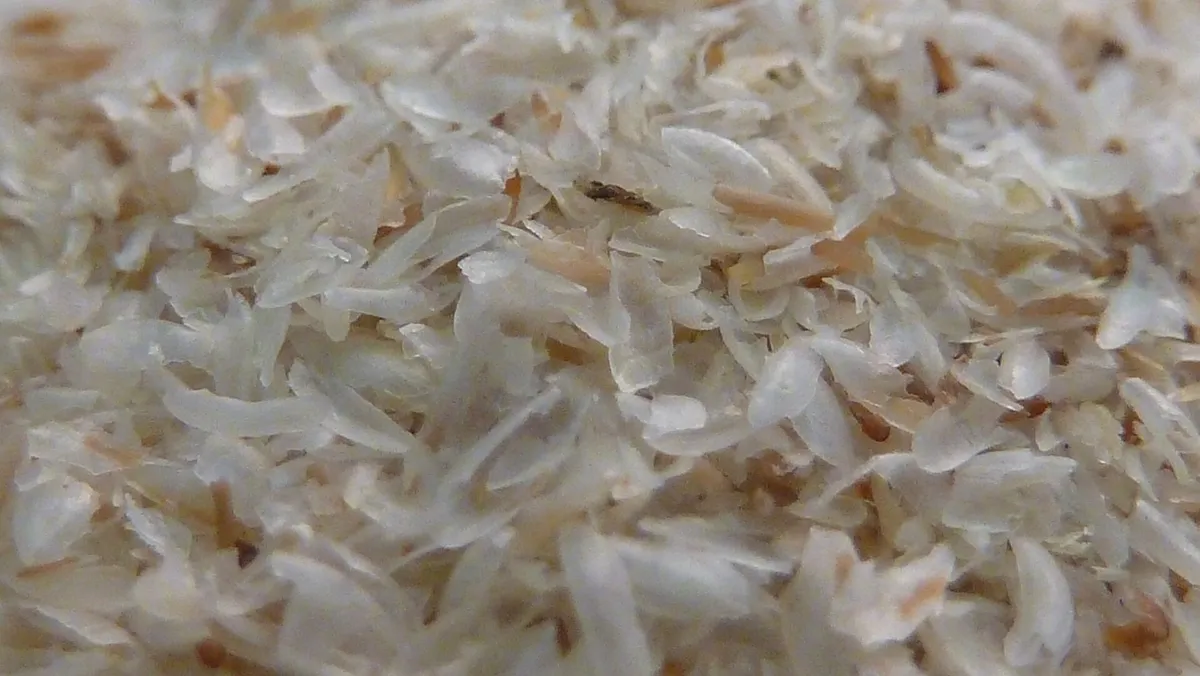
The plant is cut, dried and threshed for its seed, and the seed is milled to strip off the outer coat. About 30% of the seed's weight comes away as husk. The husk is then sieved, cleaned and graded by purity, and some of it is ground into powder.
The Vikaspedia guide describes the farm end. The crop is cut close to the ground in the early morning, to limit seed loss, stacked for a day or two, then trampled to free the seed and winnowed. Bullocks did the trampling traditionally; Krishi Jagran notes tractors now do it too.
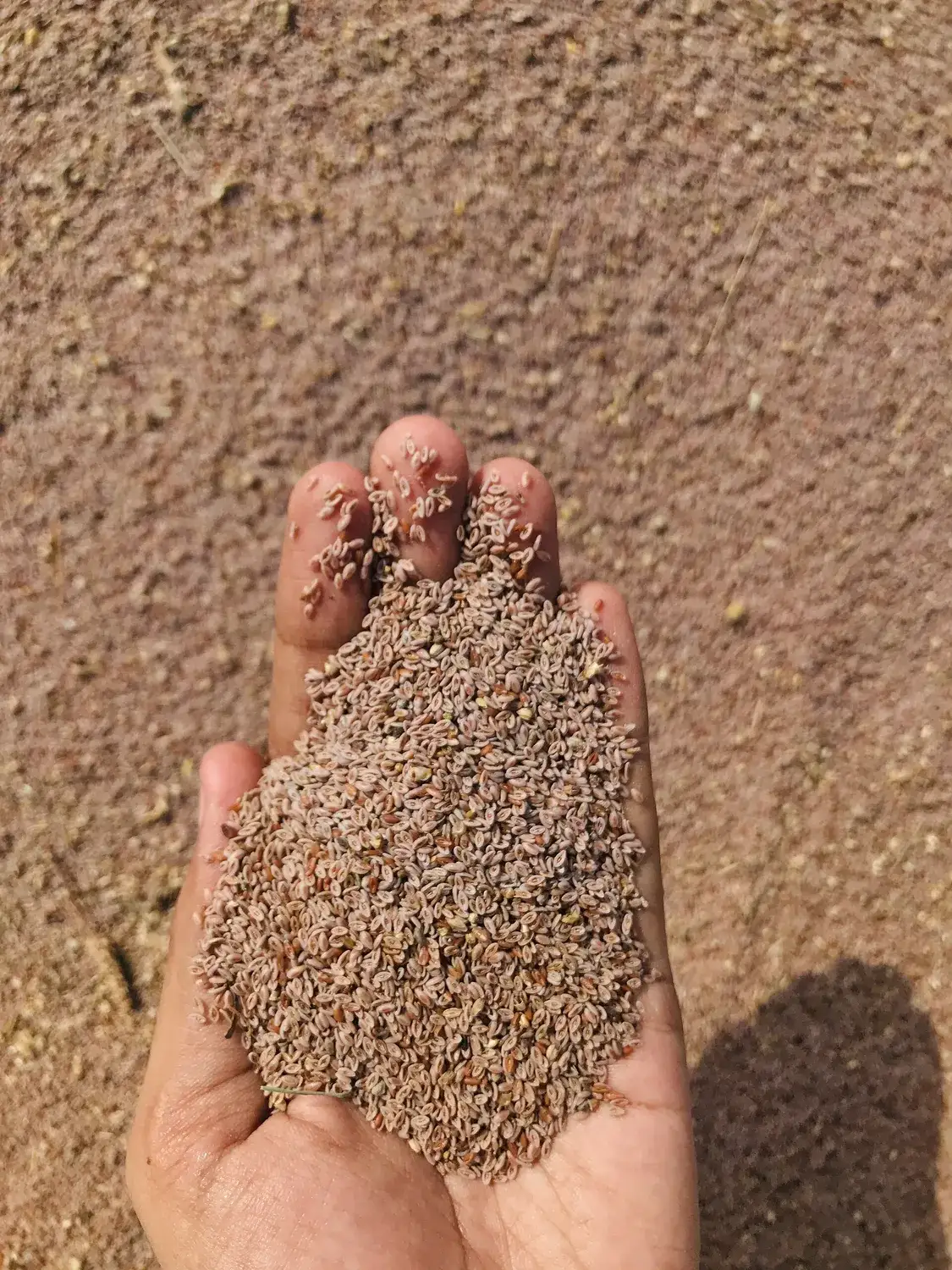

Most of that seed is sold in one burst. According to the Isabgol Processors Association, nearly 70% of each year's seed is bought between April and June, while exports run all year.
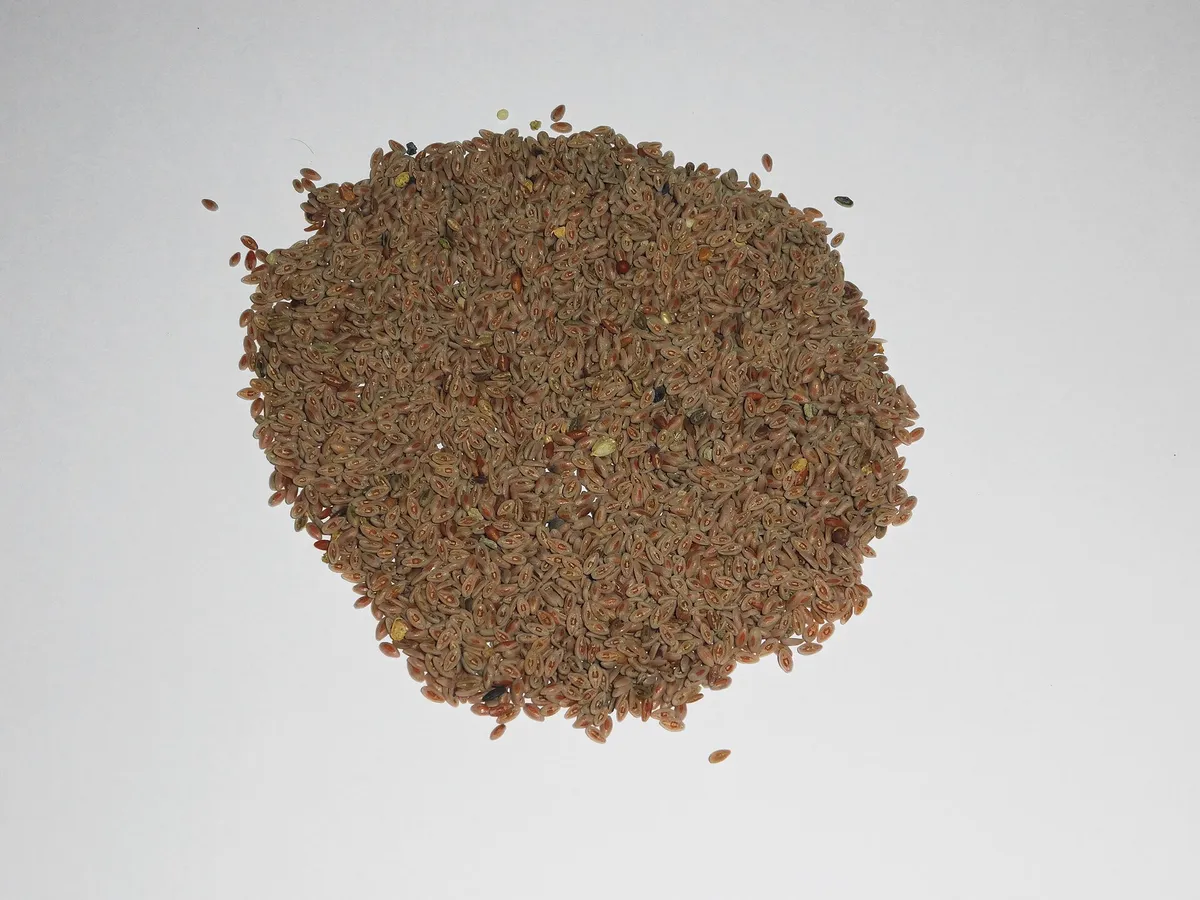

NIFTEM's manual describes the factory end:
| Step | What happens |
|---|---|
| Cleaning | Seed is sieved, aspirated and passed over magnets to remove soil, stones, other seeds and metal |
| De-husking | Seed is crushed in emery mills so the coat cracks away from the kernel |
| Separation | Air and sieves split the light husk from the heavier kernel |
| Cleaning and grading | Gravity separators clean the husk further; it is graded by purity |
| Powdering | Some husk is ground into husk powder |
| Fumigation and packing | Husk is treated against pests, packed and labelled by grade |
The first pass through the mill gives the purest husk. NIFTEM says it fetches the best price, and that each further milling pulls off more husk but dilutes its purity and colour.

What do 85%, 95%, 98% and 99% isabgol mean?
The percentages are trade grades of husk purity. They mostly measure how much "light extraneous matter", meaning non-husk material, is mixed in. The 99% grade allows at most 1%, and the 85% grade allows up to 15%.
NIFTEM sets out the grades like this:
| Grade | Mucilloid content (min) | Light extraneous matter (max) | Swell volume |
|---|---|---|---|
| 85% pure | 86% | 15% | 35 ml/g |
| 95% pure | 95% | 5% | 40 ml/g |
| 98% pure | 98% | 2% | 40 ml/g |
| 99% pure | 99% | 1% | 50 ml/g |
Higher grades are cleaner husk, not a different plant. Buyers rely on the certificate of analysis for each lot, not the grade name alone.
Why is Unjha important for isabgol?
Unjha, a market town in Gujarat's Mehsana district, is where much of Rajasthan's isabgol seed is sold and milled. Seed is traded at its regulated market (APMC), and the town has far more processing units than the whole of Rajasthan. That is why the crop is grown in one state and processed in another.
The industry's own numbers show the imbalance. Isabgol Processors Association chairman Ashwin Nayak, quoted in a Hindustan Times report (reprinted by A2Z Taxcorp), said Unjha has around 80 to 90 isabgol processing units, against about 10 in Rajasthan, and that about half of Rajasthan's crop comes directly to Unjha.
NIFTEM and Rajasthan farmers in the 2025 trade report both name the lack of local markets and mills as a problem.
Unjha is often called Asia's biggest spice market. Wikipedia makes that claim on the strength of a 2005 Business Standard report, and we found no recent source to confirm it, so we describe Unjha simply as a major trading hub.
How much isabgol does India export, and to whom?
In 2024-25 India exported 64,089 tonnes of psyllium husk worth US$418.94 million (₹3,540 crore). The United States took about 35% by value, then Germany and Italy. Commonly quoted estimates say that 90 to 95% of India's crop is exported.
The export figures are from the Commerce Ministry's TradeStat database, under HS code 12119032, "psyllium husk (isobgul husk)". Exports of whole seed (HS 12119013) were only US$6.36 million that year. India ships husk, not seed.
| Destination, 2024-25 | Value (US$ million) | Share of value |
|---|---|---|
| United States | 144.63 | 34.5% |
| Germany | 65.06 | 15.5% |
| Italy | 38.81 | 9.3% |
| United Kingdom | 13.41 | 3.2% |
| France | 13.19 | 3.1% |
| Bangladesh | 11.03 | 2.6% |
| All countries | 418.94 | 100% |
Here the sources part ways. A Business Today article from November 2025 says the US accounts for "nearly 70%" of India's psyllium exports. The government's own figures for 2024-25 give about half that.
TradeStat has an inconsistency of its own. Its commodity summary lists 2023-24 husk exports as US$753.73 million and 87,556 tonnes. Adding up its country-by-country figures for the same year gives US$376.83 million and 43,778 tonnes, almost exactly half. We use the country-level total. On that basis, export volume rose by about 46% in 2024-25, which fits the bumper Rajasthan harvest of spring 2024.
The export share is better agreed. The Banaskantha district page and NIFTEM both say 90 to 95% of India's isabgol is exported. The processors' association puts it at about 90%.
India's share of world supply is the weakest number of all. NIFTEM says India produces "about 80%" of the world's isabgol husk powder, and Business Today, quoting an investment banker, also says 80%. The 2025 trade report credits Rajasthan alone with 90% of global output. A figure of 98% also circulates, but we could not trace it to a source we could open. The fair summary is that India supplies something like 80 to 90% of the world's psyllium, with no reliable official figure.
What this adds up to
Isabgol starts as a winter crop on irrigated desert farms in western Rajasthan, and to a lesser extent north Gujarat. It is threshed on the farm, sold mostly between April and June, and milled into husk largely in and around Unjha. Most of it then leaves the country, about a third of it by value for the United States.
The geography is clear. The numbers are not. Rajasthan's share is quoted at 67% or 70% with no stated method, the national totals that most sources repeat are far below what Rajasthan alone now reports, a widely shared claim about US demand is double the official figure, and India's world share has no official source at all.
With India supplying most of the world's psyllium, most of the isabgol people take, whether for cholesterol, for weight or every day, started in this belt. Isabgol, psyllium and ispaghula are one product under three names: the coat of a desert seed.